Wall Décor for Small Hong Kong Flats: Sizing, Hanging Heights and No-Drill Options
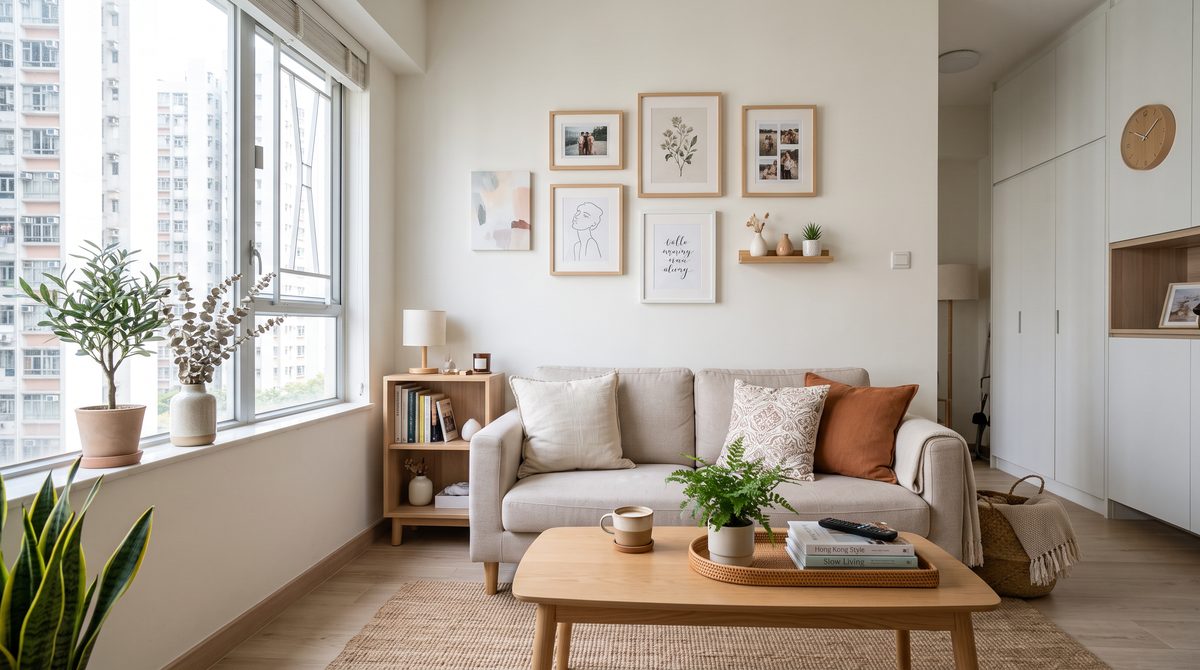
Introduction
Nothing turns a new flat into a home faster than the first photo on the wall.
Wall décor covers everything you hang up: framed photographs, canvas prints, gallery walls, shelves and hanging textiles. In Hong Kong it also has to solve two local problems: floor space is tight, and plenty of walls cannot be drilled. This guide covers how to size a piece correctly, the height to hang it at, gallery wall layouts, and what to do when drilling is not an option.
Key Takeaways
- Sizing is where most people go wrong: a main piece above a sofa should be roughly two-thirds the width of the sofa.
- Hang so the centre of the image sits about 145–150cm from the floor, standing eye level, the standard used by galleries.
- Gallery walls work in three layouts: symmetrical grid, centre-out cluster, or staircase diagonal. Pick one and commit.
- Renting, or walls you cannot drill? Adhesive hooks, picture ledges and rail systems all work.
- Fotomax offers photo enlargement and framing
Table of Contents
1. What Counts as Wall Décor?
Wall décor is anything mounted on a wall for visual effect and the most personal category by far is a framed photograph.
The difference between a photograph and a print bought off the shelf is where the content comes from. An abstract canvas from a homeware shop works in anyone's flat. An enlarged family portrait, a travel landscape, or your baby's hundred-day photo works in exactly one. That is why more people now build their walls from their own images: what goes up is not just decoration, it is the contents of that particular home.
Common formats:
- Framed prints — the classic. One statement piece, or several in a group.
- Canvas prints — lighter, frameless, good for covering a large area.
- Metal panel prints — sleek, durable, and modern, with vivid colours and a smooth finish
- Gallery walls — many smaller prints arranged as one composition.
- Picture ledges — frames rest on a narrow shelf and can be swapped any time, with only two drill holes total.
2. How Do I Choose the Right Size?
The rule: a main piece should be about two-thirds the width of the furniture beneath it.
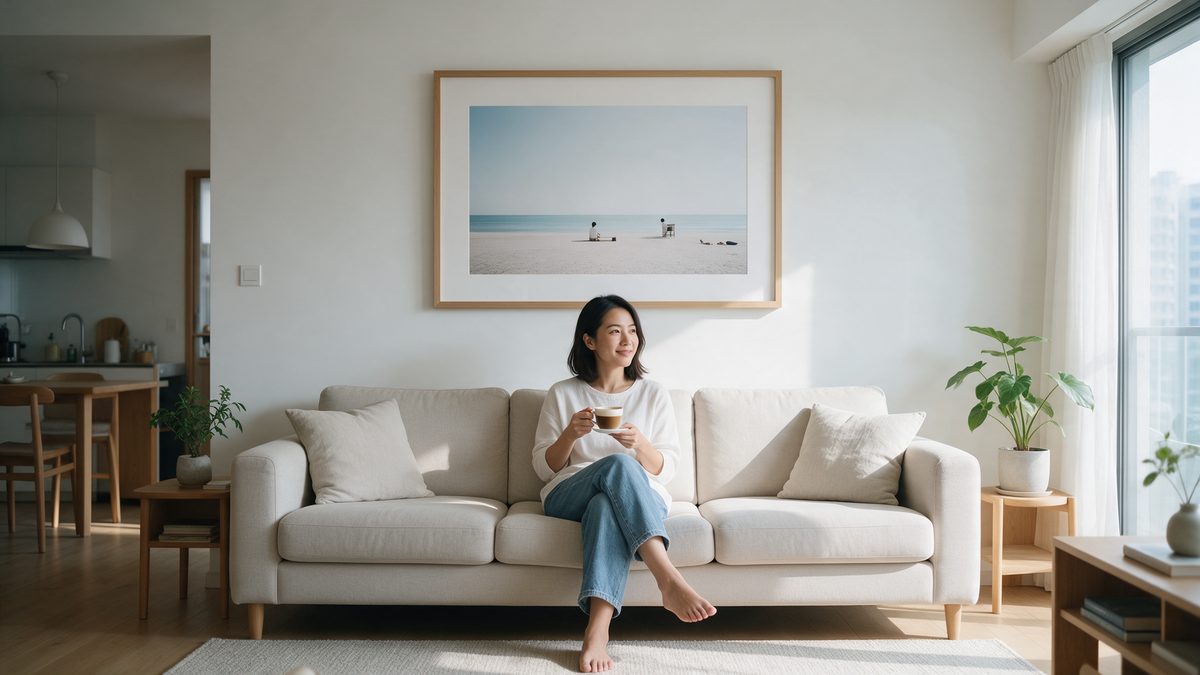
This is the single most common mistake. An 8R print above a three-seat sofa reads as a postage stamp in the wrong place.
| Location | Suggested size | Notes |
|---|---|---|
| Above a three-seat sofa | 100cm or larger | Roughly two-thirds the sofa width |
| Above a double bed | 70cm | Same rule, or use two pieces side by side |
| Hallway or entrance wall | 60cm | Portrait orientation usually fits better |
| Above a desk or piano | 50cm | Small to medium, or a gallery cluster |
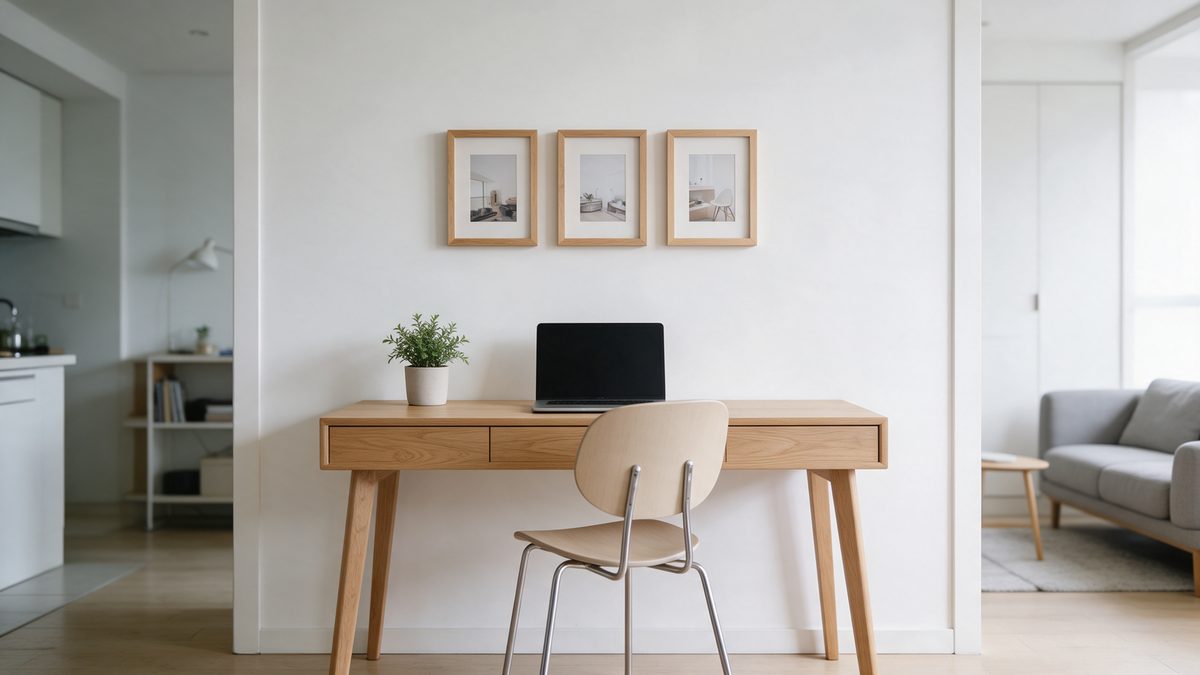
If wall space is limited: rather than hanging one small print, hang three small prints as a set. Visually, the total width of the group is the "size", not the individual frame.
3. What Height Should It Hang At?
Centre of the image at roughly 145–150cm from the floor: standing eye level. This is the museum and gallery standard.
Most people hang too high. The usual reason: you hang while standing on a stool, using your eye level at that moment as the reference. The result sits noticeably above where anyone actually looks from a chair.
- Above a sofa or bed: leave about 15–25cm between the top of the furniture and the bottom of the frame, so the two read as one group rather than two floating objects.
- A practical trick: cut newspaper or kraft paper to the frame's dimensions and tape it up first. Live with it for a few days, sitting down, before you commit to a drill hole.
4. Three Gallery Wall Layouts
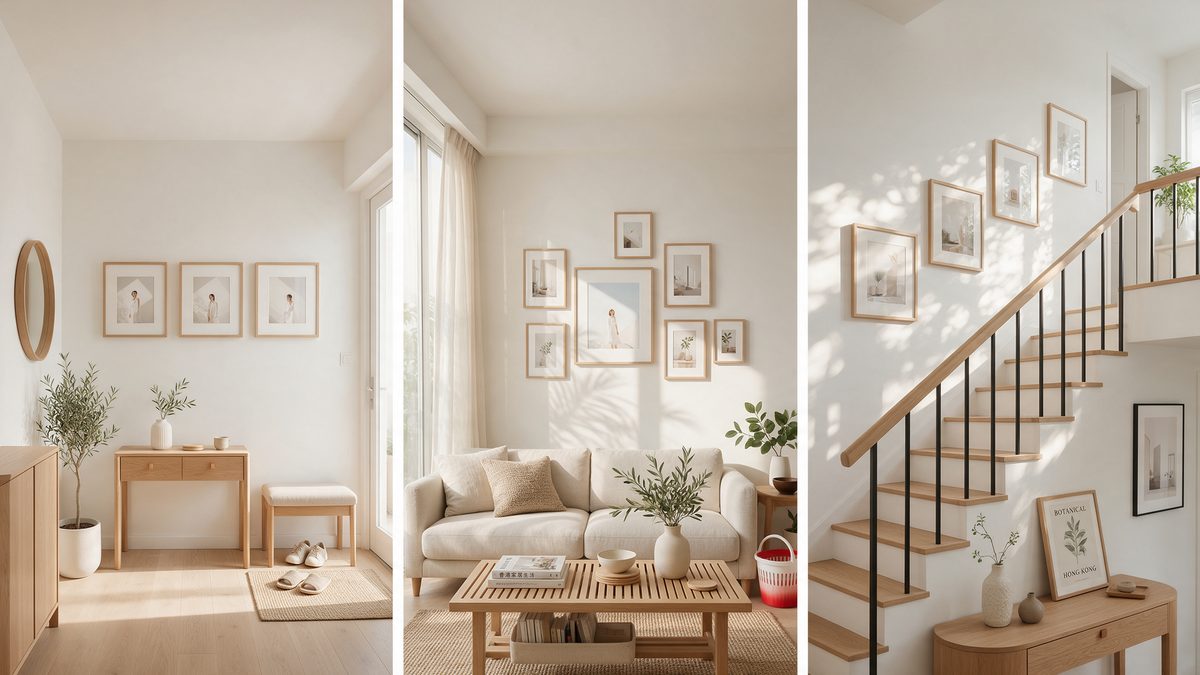
Choose one layout and stay with it, the gallery walls that fail are the ones mixing all three.
Layout 1: Symmetrical grid
Identical frames, identical sizes, arranged 2×2, 3×3 or 2×3. The tidiest, easiest and most forgiving option. Ideal for corridors and landings.
Layout 2: Centre-out cluster
Anchor one larger piece in the middle, then arrange smaller pieces around it. Gives a clear visual centre; suits a wide wall above a sofa.
Layout 3: Staircase diagonal
Frames follow the slope of a staircase, with their centre points forming a line parallel to the handrail.
Three rules that apply to all three:
- Keep the gaps consistent to usually 5–8cm. Spacing affects the finished look more than frame style does.
- Uniform frames, varied content. Keep frame colour and style consistent; the photos themselves can freely mix black-and-white with colour.
- Lay it out on the floor first. Photograph the arrangement with your phone, adjust, and only then start measuring the wall.
5. What If I Cannot Drill Into the Wall?
Rented flat, concrete too hard, or worried about the deposit, these four options need no drilling at all.
| Option | Weight capacity | Notes |
|---|---|---|
| Adhesive hooks | Varies by product , about 1-1.5kg | Needs a smooth, clean surface; not suitable for flaking paint |
| Picture ledges | Higher | The ledge itself is fixed, but two holes hold many frames |
| Picture rail system | High | Installed once; position and height adjustable afterwards |
| Leaning | — | Large prints resting against the wall on a sideboard or floor |
6. Practical Notes for Small Hong Kong Flats
- Light frames open up the room. White and natural wood read lighter than dark frames, the difference is obvious in a compact space.
- Go portrait, not landscape. In flats with low ceilings, vertical compositions draw the eye upward.
- Negative space matters. A small flat needs restraint: one focal wall reads as more spacious than four decorated ones.
- Humidity and sunlight. Hong Kong humidity makes bathroom-adjacent walls a poor choice, and prolonged direct sun will fade a print. Avoid unshaded west-facing windows.
7. What Fotomax Offers
Fotomax offers personalised wall décor options for displaying your own photos. Browse the Fotomax wall décor collection for current styles, sizes and prices.
| Service | Sizes | Price |
|---|---|---|
| Photo enlargement | 5” x 7” to 20” x 24” | HK$20 up |
| Canvas | 8” x 8” to 20” x 24” | HK$328 up |
| Light frameless Photo Panels | 7”x 7” to 8”x20” | HK$78 up |
Can I enlarge a phone photo?
Usually yes, within limits. What matters is the resolution of the original file — and a version downloaded from WhatsApp or Instagram has already been compressed, so it will show artefacts once enlarged. Always use the original file from your camera roll.
8. Frequently Asked Questions (FAQ)
Q1. How large can a phone photo be enlarged?
Print quality depends on the original image quality and the size you want to enlarge it to. Avoid using compressed images from messaging apps whenever possible.
Q2. How many prints do I need for a gallery wall?
It depends on the wall. Six to nine is a common starting point, and leaving room to add more later usually looks more natural than filling the wall at once.
Q3. Can old photos be enlarged?
Yes! Scan them first, then enlarge. Faded or damaged prints can also be restored digitally.
Q4. Will prints fade?
Yes, particularly under direct sunlight. Keep them away from unshaded west-facing windows.
Q5. What wall décor options are available at Fotomax?
Fotomax offers personalised wall décor options such as photo enlargements, framed prints and other display formats. Available styles, sizes, materials and prices vary by product.
Q6. How long does framing take?
5 - 14 days, depends on the styles.
A Whisper from the Fotomax Editor
We have had customers collect a beautiful enlargement, then leave it on top of a cabinet for six months — because they could not decide where to hang it.
It does not need that much deliberation. Cut a piece of paper to size, tape it to the wall, and live with it for a few days. You will know.